
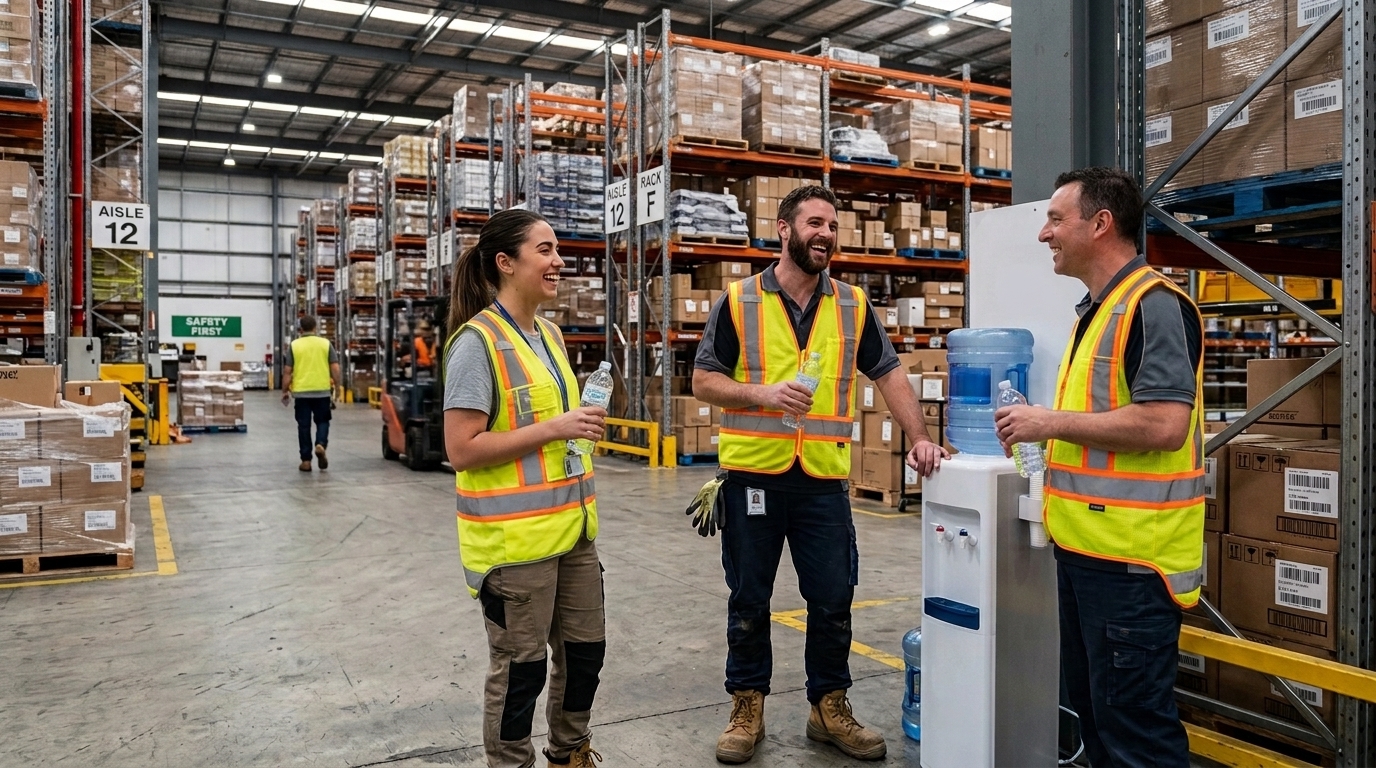
More Than Just Drinking Water
During the summer, drivers, movers, warehouse employees, mechanics, and yard workers may lose more fluid than they realize. Hot weather, physical work, long shifts, and time spent in vehicles or trailers can all increase the risk of dehydration and heat-related illness.
Dehydration can cause headaches, fatigue, dizziness, irritability, reduced concentration, and poorer coordination. These effects can interfere with driving, lifting, operating equipment, securing loads, and making safe decisions.
Hydration should be part of summer safety planning—not something addressed only after a worker begins to feel unwell.
Make water easy to access
Workers should have regular access to cool drinking water and be encouraged to drink throughout the shift. They should not have to wait until they feel thirsty or finish a demanding task before taking a water break.
Employers should consider how workers will access water when they are:
-Driving remote or unfamiliar routes
-Loading or unloading at customer sites
-Working inside hot trailers, containers, or warehouses
-Performing heavy physical work
-Delayed by traffic, road closures, or equipment problems
Vehicles and crews should begin the day with enough drinking water for the expected work and possible delays. Water should also be available close enough to the work area that employees can access it easily.
Know when the risk increases
Workers may need additional fluids and rest when the work involves:
-High temperatures or direct sunlight
-Heavy lifting, carrying, pushing, or pulling
-Repeatedly entering hot trailers or containers
-Wearing heavy clothing or personal protective equipment
-Long shifts or overtime
-Limited access to water or washrooms
Heat risk depends on more than the outdoor temperature. Humidity, direct sunlight, physical effort, clothing, air movement, and length of exposure can all affect how the body responds.
New workers and workers who are not yet accustomed to hot conditions may also require additional monitoring and support.
Build hydration into the workday
Simply telling employees to drink more water may not be enough. Hydration should be included in the way work is scheduled and supervised.
Practical measures include:
-Stocking vehicles and work areas with cool drinking water
-Scheduling regular water and rest breaks
-Providing refill locations
-Reminding crews to drink before demanding tasks
-Checking that remote workers have adequate supplies
-Increasing breaks as temperatures and physical demands rise
Supervisors should not create a workplace culture where workers feel pressured to skip water breaks to remain on schedule. During busy periods, access to water and rest often becomes more important—not less.
For most routine work, water should be the main source of hydration. Energy drinks and highly caffeinated or sugary beverages should not replace water, food, rest, or sleep.
Workers who are sweating heavily for long periods may also lose salts. Employers should ensure their heat-stress procedures consider the type of work, duration of exposure, and fluids available. Workers with medical conditions or questions about fluid intake should follow advice from a healthcare professional.
Recognize the warning signs
Early signs of dehydration or heat stress may include:
-Thirst
-Headache
-Fatigue or weakness
-Dizziness
-Nausea
-Muscle cramps
-Irritability
-Reduced alertness
-Heavy sweating
A worker showing these symptoms should stop working, move to a cooler area, drink water if they are able, and be monitored. Medical assistance may be required if symptoms are serious or do not improve.
Workers should be encouraged to report symptoms early rather than trying to finish the route, delivery, move, or shift.
Confusion, unusual behaviour, collapse, loss of consciousness, or a very high body temperature may indicate heat stroke. Heat stroke is a medical emergency. Call emergency services immediately, move the person to a cooler location, and begin cooling them while following workplace first aid procedures.
Do not leave an unwell worker alone or allow them to drive themselves for medical assistance.
Do not overlook drivers
Drivers may spend much of the day in an air-conditioned cab, but they can still face heat exposure while completing inspections, securing loads, tarping, handling breakdowns, or entering hot trailers.
Some drivers may also limit their water intake because they are concerned about finding washrooms along the route. Employers should consider access to washroom facilities when planning schedules.
Drivers should keep water where it can be reached safely without interfering with vehicle controls or causing distraction.
Make hydration part of the plan
Employers should include hydration in their summer and heat-stress procedures. The plan should identify:
-Where drinking water will be available
-Who will restock it
-How workers on the road will access it
-When additional breaks are required
-What supervisors should do when symptoms are reported
-How first aid or emergency assistance will be obtained
Hydration is only one part of preventing heat stress. It does not replace shade, cooling, ventilation, reduced physical demands, suitable scheduling, acclimatization, or rest breaks.
A bottle of water in the vehicle is a good start. A workplace that makes it easy—and expected—for workers to stay hydrated is better.
Latest Resources

Small OHS Habits That Make a Big Difference
In trucking, moving, and storage, safety does not depend only on large policies or fo ...

New Season, New Workers
Why Orientation Matters Before the First Shift June often brings change to the workp ...