

New Season, New Workers
Why Orientation Matters Before the First Shift
June often brings change to the workplace. In BC’s trucking, moving, and storage industries, that may mean seasonal hires, student workers, new drivers, warehouse workers, swamper crews, yard staff, dispatch support, or employees returning to work after time away. It may also mean existing workers taking on new tasks, moving to a different site, or facing hazards they have not worked around before.
That is why orientation matters. A strong safety orientation is not just a form to complete on a worker’s first day. It is a key step in helping workers understand the hazards of the job, the procedures they are expected to follow, and who they can go to when they have questions or concerns.
Under BC’s Occupational Health and Safety Regulation, employers must ensure young and new workers receive health and safety orientation and training specific to their workplace before they begin work. A young worker is anyone under 25, while a new worker can be any age. This includes someone who is new to the workplace, returning to a workplace where hazards have changed, affected by changes in workplace hazards, or relocated to a workplace with different hazards.
In trucking, moving, and storage, those hazards can change quickly. A worker may be loading freight in a warehouse one day, helping with a residential move the next, or working around forklifts, trucks, trailers, ramps, loading docks, traffic, customers, and changing weather conditions. Even experienced workers may need additional orientation if the worksite, equipment, process, or hazard changes.
A good orientation should clearly explain workplace health and safety rules, the worker’s supervisor and contact information, emergency procedures, first aid arrangements, personal protective equipment, and how to report injuries, illnesses, unsafe conditions, or near misses. Workers should also understand their rights and responsibilities, including the right to refuse unsafe work.
For trucking employers, this may include reviewing safe yard movement, coupling and uncoupling, load securement expectations, pre-trip procedures, working alone, fatigue reporting, and communication protocols. For moving and storage employers, it may include safe lifting, stair carries, customer-site hazards, use of dollies and straps, vehicle loading, slips and trips, and how to stop work when a task cannot be completed safely.

Supervision is also part of the process. New workers may hesitate to ask questions, especially if they are trying to make a good impression or keep up with a crew.
Employers should also document orientation and training. Keeping records helps confirm what was covered, when it was completed, and whether additional training was provided. A checklist can make orientation more consistent and can be customized to reflect the specific hazards of a trucking, moving, storage, warehouse, yard, or office environment.
This is also a good time to look at how your Joint Health and Safety Committee supports new and returning workers. A strong committee can help identify workplace hazards, review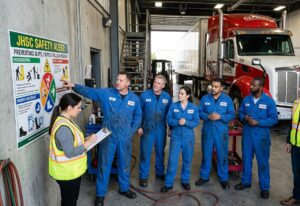 inspection findings, discuss worker concerns, and support practical improvements before incidents happen. For companies in trucking, moving, and storage, this may include reviewing hazards in yards, warehouses, shops, loading areas, customer sites, and vehicle operations.
SafetyDriven offers Joint Health and Safety Committee training to help employers and worker representatives understand how to build and run an effective committee, conduct workplace inspections, identify hazards, and complete risk assessments. If your committee needs a refresh, or if new members have joined, training can help ensure everyone understands their role in supporting a safer workplace.
Before the busy season gets further underway, employers should take time to review their orientation process. Ask whether it reflects the actual work being done, whether seasonal and returning workers are included, whether supervisors know what to cover, whether the Joint Health and Safety Committee is involved where appropriate, and whether workers receive follow-up after their first few shifts.
A safe start can shape how a worker approaches the job long after orientation is over. When workers understand the hazards, know the procedures, and feel comfortable speaking up, they are better prepared to protect themselves, their co-workers, customers, and the public.
Safety begins before the first shift. Make orientation clear, specific, documented, and ongoing.
Latest Resources

Small OHS Habits That Make a Big Difference
In trucking, moving, and storage, safety does not depend only on large policies or fo ...

When the Truck Isn’t Moving: The Injury Risks Drivers Face Every Day
When people think about safety in trucking, they usually think about what happens on ...