

October 1 – April 30: Be Prepared, Stay Safe
When winter arrives in BC, traction is everything. From October 1 to April 30, commercial drivers are legally required to carry chains and be prepared to use them. Winter driving brings challenges in snow, ice, reduced visibility, and steep grades. That can test even the most experienced operators; proper preparation with winter tires and chains helps keep drivers, their loads, and everyone else on the road safe.
Know the Rules
-
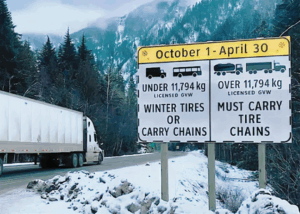
Seasonal Requirement: Commercial vehicles with a gross vehicle weight rating (GVWR) over 11,794 kg must carry chains between October 1 and April 30 on most B.C. highways.
-
Chain-Up Areas: Watch for roadside signs on approaches to mountain passes and other high-risk routes. When signs indicate chains are required, drivers must stop and install them.
-
Penalties: Failure to carry or use chains when required can result in fines, vehicle impoundment, or both. More importantly, non-compliance increases the risk of collisions or becoming stranded.
Winter Tires and Chains: Working Together
-
Winter Tires: Tires marked with the mountain/snowflake symbol or the M+S (mud and snow) designation meet the minimum legal requirement, though mountain/snowflake tires provide superior cold-weather performance.
-
Chains: Even with proper tires, heavy commercial vehicles often require the extra grip chains provide to climb steep or icy grades safely. Chains should fit snugly, be free of broken links, and match tire size.
When to Chain Up
Visit DriveBC.ca often as it will provide alerts when and where chain-up is in effect.
- Before the Climb: Install chains in designated pullouts or safe areas before tackling steep grades. Waiting until traction is lost can make installation dangerous.
- Watch for Signs: Electronic boards and posted signs will indicate when chains are mandatory.
- Don’t Wait for Trouble: If conditions look poor, it’s better to chain up early than risk losing control or blocking traffic.
Installing Chains: Best Practices
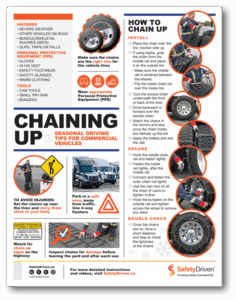
- Practice First: Get comfortable installing chains before you’re in a snowstorm on the side of a highway.
- Use Proper Tools: Gloves, safety glasses, and a headlamp make installation easier and safer.
- Check Tension: Drive forward a short distance, then stop and re-tighten chains.
- Drive Carefully: With chains on, reduce speed to a maximum of 50 km/h, avoid sudden braking, and steer smoothly.
- Remove Promptly: Take chains off when roads clear to avoid tire damage and excessive wear.
Check out our Chain Up poster here.
Common Mistakes to Avoid

- Carrying the wrong size chains for your tires.
- Leaving damaged or rusted chains in service.
- Waiting until you’re already stuck before chaining up.
- Driving too fast with chains installed.
Watch this video for step-by-step instructions on how to put chains on a commercial vehicle.
Preparing Before October 1
- Inspect all chains for wear and damage.
- Confirm proper fit for current tire sizes.
- Replace missing cross-links or bent fasteners.
- Train drivers on installation techniques in safe, dry conditions.
- Stock spare links, repair tools, and storage containers in each vehicle.
Stay Ahead This Season
Winter driving doesn’t have to mean unpredictable delays or risks. By carrying the right equipment, knowing when and how to chain up, and preparing early, commercial drivers can meet legal requirements and keep freight moving safely.
Remember: Between October 1 and April 30, winter tires and chains aren’t optional; they’re the law, and they save lives.
Latest Resources

Driving Safely Through BC’s Summer Season
Summer can be one of the busiest and most demanding seasons for commercial drivers in ...

Prevention Is the Best Protection: Sun Safety for Warmer Days
It may not feel like summer just yet, especially after a cold and rainy stretch of sp ...