
Wildfire Preparedness
Planning for Changing Conditions
Wildfire conditions can change quickly in British Columbia. A route that was open when a driver left the yard may be delayed, restricted, or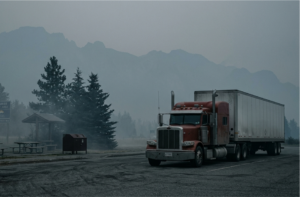 closed later in the day. A delivery location may be placed under an evacuation alert. Smoke may also create hazardous working conditions hundreds of kilometres away from the fire itself.
For trucking and moving and storage employers, wildfire preparedness is not simply about keeping vehicles moving. It is about knowing when operations need to slow down, change direction, or stop altogether.
A clear plan allows dispatchers, supervisors, and workers to make those decisions before they are placed under pressure.
Monitor conditions throughout the day
Checking conditions at the beginning of a shift is important, but it may not be enough during wildfire season. Employers should establish who is responsible for monitoring developments throughout the day and how new information will be communicated to workers.
Useful sources include:
–DriveBC for highway closures, delays, advisories, and highway-camera images
-The BC Wildfire Service for current wildfire locations and status
–EmergencyInfoBC and local governments or First Nations for evacuation alerts and orders
–Local air-quality and weather information for smoke conditions
Wildfires are dynamic, and official information may change as conditions develop. Companies should avoid relying only on informal social-media posts, reports from other drivers, or information received several hours earlier.
Decide who has the authority to change the route
Drivers should not have to negotiate for permission while approaching a closure, heavy smoke, emergency activity, or an evacuation area.
Before a trip begins, everyone should know:
-Who can reroute or cancel a trip
-When dispatch must be contacted
-What the driver should do if communication is lost
-Where a vehicle can safely wait
-How customers will be notified of delays
-Who has the authority to stop work
Dispatch schedules should allow for changing road conditions, detours, congestion, and required rest. A wildfire-related delay should not result in pressure on the driver to speed, skip breaks, continue while fatigued, or use an unsuitable alternate route.
Not every road shown on a navigation application is appropriate for a commercial vehicle. Drivers should follow official instructions and confirm that any alternate route can safely and legally accommodate the vehicle and load.
Do not drive through dangerous smoke or an active fire area
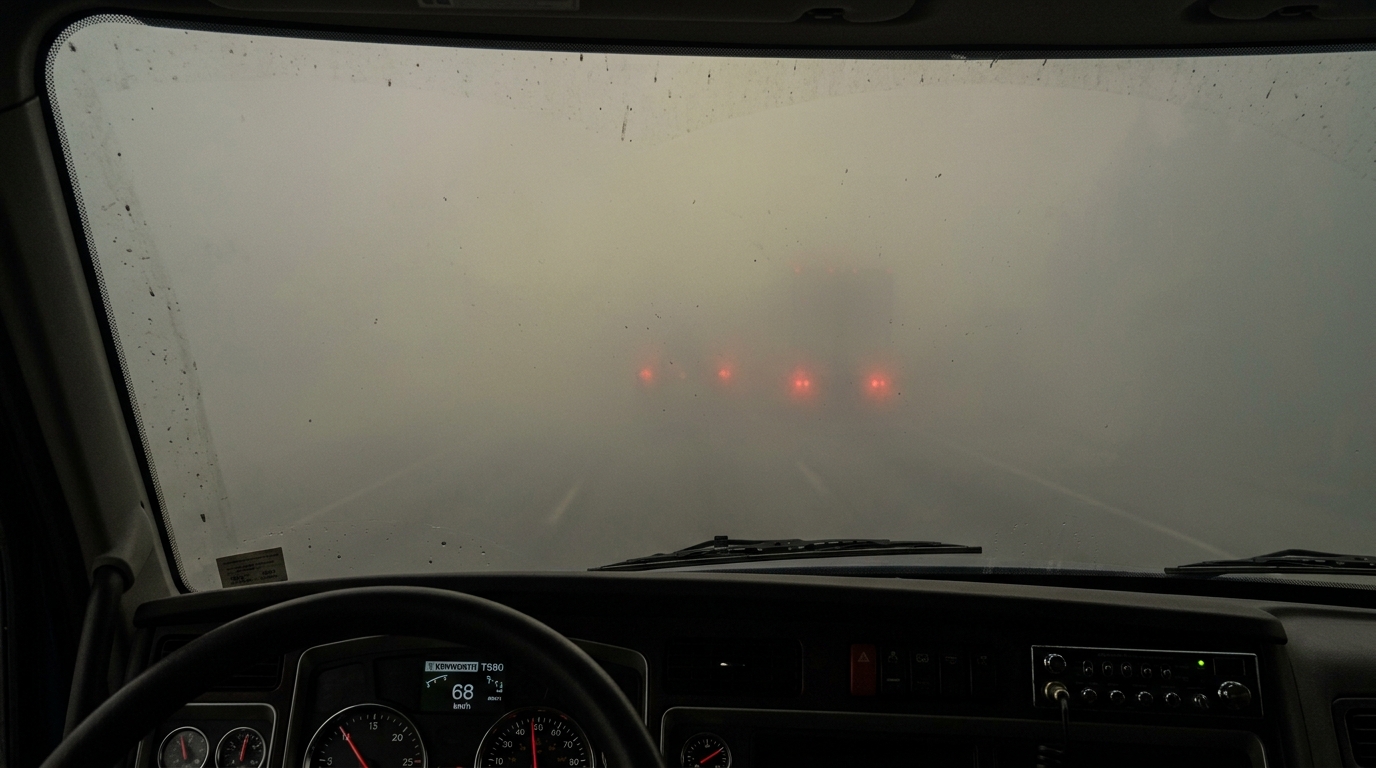
Drivers should avoid travelling through dense smoke whenever possible. Smoke can significantly reduce visibility and make it difficult to see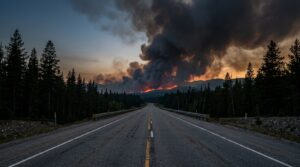 stopped vehicles, debris, wildlife, traffic-control personnel, and emergency responders.
When smoke affects visibility, drivers should slow down, increase their following distance, use low-beam headlights or fog lights, and avoid high beams, which can reflect off smoke. Windows should be kept closed, and the vehicle’s ventilation system should be set to recirculate air where appropriate.
A road remaining technically open does not automatically mean that continuing is the safest decision. Drivers must still consider visibility, fire activity, traffic congestion, fatigue, vehicle condition, and whether a safe destination or stopping location is available.
Workers should never enter a closed area, pass emergency barricades, or ignore instructions from emergency officials to complete a pickup, delivery, or move.
Protect workers from wildfire smoke
Wildfire smoke should be treated as a workplace hazard. It can affect drivers inside vehicles, movers carrying furniture outdoors, yard workers, warehouse employees, mechanics, and others performing physically demanding work.
Employers should assess the risk of exposure based on the work location, current conditions, the tasks being performed, the level of physical exertion, and the length of exposure. Controls may include:
-Relocating or rescheduling work
-Reducing strenuous outdoor activity
-Providing additional rest breaks in an area with cleaner air
-Keeping vehicle and building ventilation systems properly maintained
-Replacing filters when needed
-Limiting the amount of time workers spend outside
-Providing appropriate respiratory protection where required
WorkSafeBC advises employers to monitor air quality and weather forecasts and to adjust the schedule, pace, or location of work when smoke levels rise. Where respirators are required, they must be suitable for the hazard and workers must receive the necessary instruction and fit testing.
Workers should be encouraged to report symptoms or concerns promptly. A worker experiencing breathing difficulty, chest discomfort, severe coughing, dizziness, or other serious symptoms may require immediate medical assistance.
Prepare vehicles and workers for delays
Wildfire disruptions may leave a driver stopped for several hours or require an unplanned overnight stay. Each vehicle should carry appropriate emergency supplies for the route and conditions.
Depending on the operation, supplies may include: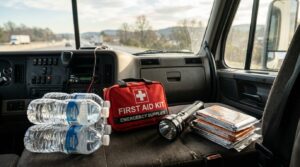
-Drinking water and non-perishable food
-A charged phone and backup power source
-A first aid kit and inspected fire extinguisher
-Flashlight and reflective warning equipment
-Paper maps or offline route information
-Necessary medications and personal supplies
-Protective masks for use outside the vehicle in smoky conditions
-Company emergency contact information
Drivers should also begin the trip with adequate fuel or battery capacity. A major detour, extended idling period, or closure may make the original refuelling plan unrealistic.
Include moving crews and customer sites in the plan
Moving and storage operations face additional challenges because workers may be sent to private homes, storage facilities, or commercial sites in unfamiliar communities.
Before sending a crew into an area affected by wildfire activity, confirm:
-Whether the community is under an evacuation alert or order
-Whether the customer site can be accessed safely
-Whether the crew has a reliable route out
-Whether smoke conditions allow physically demanding work
-Who will cancel or postpone the move if conditions worsen
Customers may feel significant pressure to remove belongings from an affected property. However, workers should not be sent into an evacuation-order area or dangerous environment to recover property. Life and worker safety must remain the priority.
Make the decision before conditions become critical
An effective wildfire response plan does not attempt to predict every possible situation. It gives workers and supervisors a clear process for assessing conditions, communicating changes, and making safe decisions.
Review the plan with drivers, dispatchers, supervisors, moving crews, and other affected workers. Confirm that contact information is current, emergency supplies are available, and everyone understands that a schedule or delivery commitment can be changed when conditions are unsafe.
When wildfire conditions change, the safest operation is the one that is prepared to change with them.
Latest Resources

Driving Safely Through BC’s Summer Season
Summer can be one of the busiest and most demanding seasons for commercial drivers in ...

Prevention Is the Best Protection: Sun Safety for Warmer Days
It may not feel like summer just yet, especially after a cold and rainy stretch of sp ...